In the Footsteps of Heroes: Sites in Pardubice
Zámeček Memorial
The Zámeček Memorial is one of the most important places of remembrance in Pardubice. During World War II, the site served as an execution ground used by the Nazi Gestapo. After the assassination of Reinhard Heydrich, 194 people from the Pardubice, Kolín and Hradec Králové regions were executed here within just 18 days in June and July 1942.
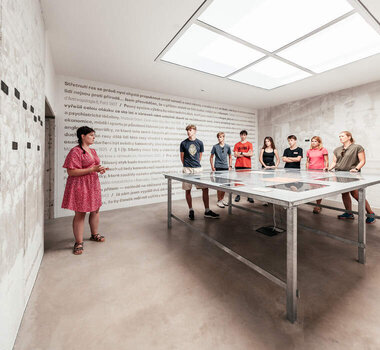
Today the memorial consists of an outdoor commemorative area and a museum exhibition dedicated to World War II, Nazi crimes in the region and the resistance movement connected with the Silver A paratrooper group.
Website: www.zamecek-memorial.cz
Getting there
The memorial has its own parking area. From the city centre or the main railway station it is easier to use public transport.
Bus line 2 runs from Polabiny through the main station and the city centre to the Zámeček stop several times per hour.
Bus line 27 also stops here on weekdays.
Memory of Nations Institute
The Memory of Nations Institute presents the history of the 20th century through real human stories and modern technology. Instead of traditional museum displays, visitors experience an interactive exhibition combining film, sound, projections and augmented reality.
At the beginning of the visit you choose a story to follow. The exhibition then guides you through the life of a witness to historical events such as World War II or the post-war period.
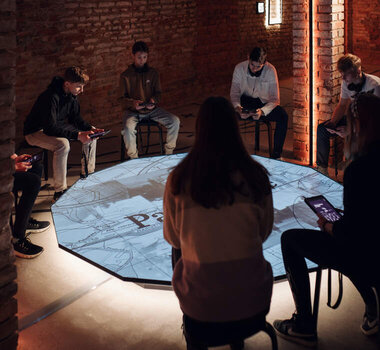
In Pardubice you can learn about the stories of people such as Jaryna Mlchová or Tomáš Sedláček. The building itself is also historically significant – according to historical records, the commander of the Silver A group stayed here for a short time.
Website: https://institut.pametnaroda.cz/en/
Jiří Potůček Forest Park
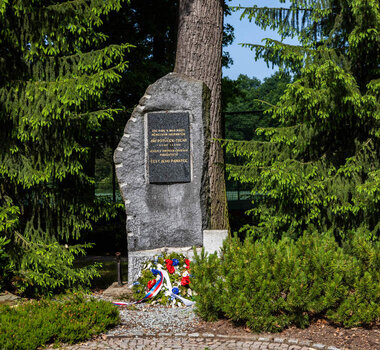
The Jiří Potůček Forest Park in the Trnová district commemorates the tragic death of radio operator Jiří Potůček, a member of the Silver A paratrooper group. He was shot here on 2 July 1942.
Today visitors can find a memorial stone, an information panel and references to other important parachute operations such as Anthropoid, Bioscop, Tin and Out Distance.
The area also serves as a public park with playgrounds and sports facilities and regularly hosts commemorative events and educational programmes.
Address: Josefa Gabčíka 345, Pardubice
Stolpersteine – Stones of the Disappeared
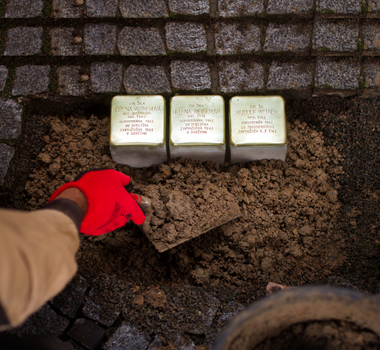
Stolpersteine are small brass plaques placed in pavements in front of the homes of victims of the Holocaust and the Nazi regime. Each stone commemorates one person and their story.
The project was created by German artist Gunter Demnig and first appeared in the Czech Republic in 2008. Pardubice joined the project in 2020.
Locations of the stones in Pardubice can be found in the city’s cultural map or in a brochure available at the tourist information centre.
New Jewish Cemetery
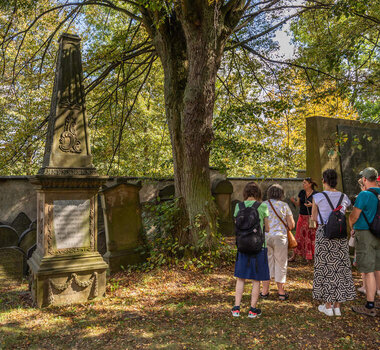
The New Jewish Cemetery in Pardubice was founded in 1883 and still serves its original purpose. The site contains more than 500 gravestones, including some transferred from the older cemetery, the oldest dating back to 1739.
The cemetery also includes a mass grave of prisoners from the so-called death transport of January 1945 and a small exhibition about the history of the local Jewish community.
The cemetery is not regularly open to the public. Visits can be arranged with the caretaker or by collecting the key from the cemetery administration.
Address: S. K. Neumanna 2708, Pardubice
Larisch Villa
Larisch Villa, often called “Zámeček”, is closely connected with the tragic events of World War II. During the war it served as the headquarters of the German police regiment Schutzpolizei and also as a prison. Prisoners, including residents of the nearby village of Ležáky, were held here before being executed at the nearby Zámeček execution site.
The villa was originally built in 1885 as a hunting residence for Count Jiří Larisch-Mönnich and designed by architect František Schmoranz.
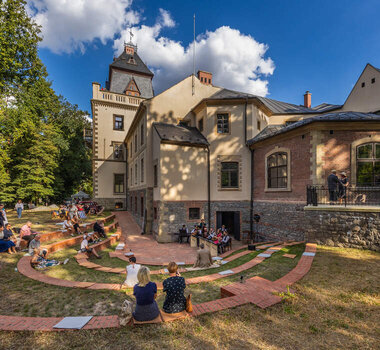
Today the villa is gradually being restored and occasionally opens to the public during events such as Museum Night or the European Heritage Days.
Website: zamecekpardubice.cz
Civil Defence Shelter – Pardubice Castle
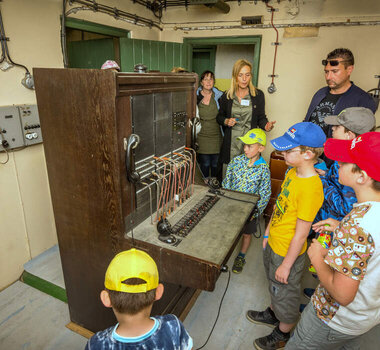
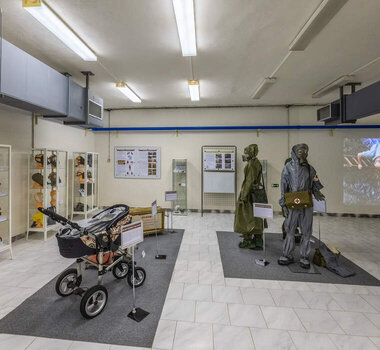
Hidden inside the castle ramparts is a Cold War civil defence shelter built from 1953 as a command centre for emergency operations.
The shelter includes original equipment such as filtration systems, communication devices, water supply and generators. The interior has been preserved in its authentic form.
Today the shelter can be visited during guided tours organised by the East Bohemian Museum.
Website: https://www.vcm.cz/en/zamek/kryt-civilni-obrany/
Civil Defence Shelter – Dubina
A fully functional civil defence shelter can be found in the Dubina district. Built in the late 1980s, it was designed to protect up to 500 people for up to 72 hours during a crisis.
Visitors can learn about civil defence during the Cold War and see protective equipment used for emergency situations. The tour also includes a simulation of the 1944 air raid on Pardubice.
The shelter usually opens during special open-day events in late summer, or guided tours can be arranged for groups.