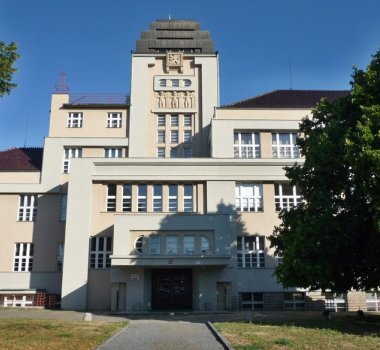
Kutná Hora
Sights
Vlašský dvůr (Italian Court)
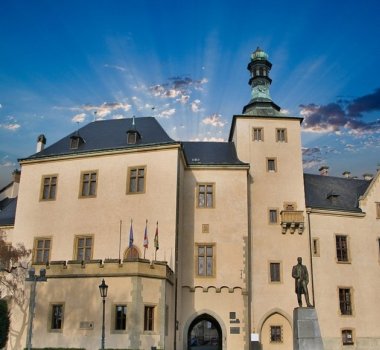
The Wallachian Court, the former royal mint and palace, is a national cultural monument of European significance. Originally a 13th century fortified mansion, it was converted by King Wenceslas II into a central mint where the Prague groschen was minted. King Wenceslas IV created a monarchical residence with the Chapel of St. Wenceslas here. Other key historical events took place in the court, including the election of George of Poděbrady and Vladislav of Jagiellon as King of Bohemia. At the end of the 19th century it underwent a neo-Gothic reconstruction, which restored its original grandeur.
Sankturinovský dům (Sankturin House)
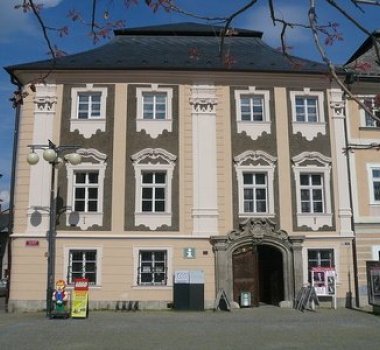
The imposing palace with a baroque façade on Palacký Square has its roots in the 13th century, when a tower house with a gothic tower stood here, used for housing and defence. In the 15th century it was owned by the goldsmith Benes of Trmice, but due to debts he sold it to Sankturin of Nedvojovice, after whom it is named. The most precious part is the chapel with a circular vault by the master Brikci. The fresco in the tower depicts the palace with a landscape. In the 18th century, the house received a Baroque façade and a mansard roof, turning it into a dignified townhouse.
Kostel sv. Jana Nepomuckého (Church of St John of Nepomuk)
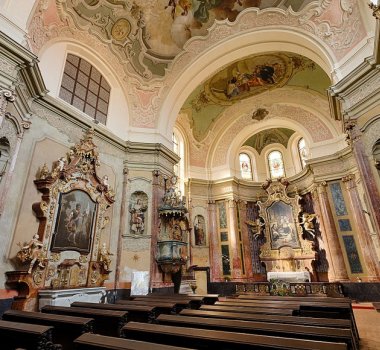
The Church of St. John of Nepomuk in Kutná Hora is an atypical architectural work, the design of which was created by FM Kaňka with the help of KI Dientzenhofer. The construction took place between 1734 and 1754 and was financed by the Kutná Hora municipality and private donors. The decoration consists of a ceiling painting of the legend of St. John of Nepomuk by J. Riedelmayer and FX Palek. The church was used by students, but in 1951 it was closed and used as a warehouse. The damaged interior underwent a difficult reconstruction in 1980-2000 at a cost of 13 million crowns.
Dačického dům (Dačický House – interactive exhibition)
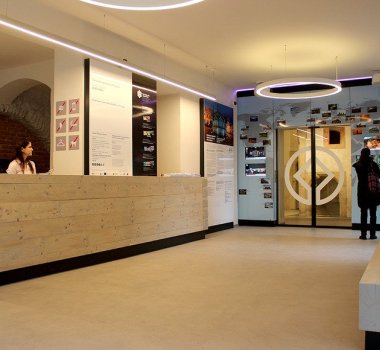
The Dačický House in Kutná Hora is a unique historical monument with an interactive UNESCO exhibition. It is housed in a converted pre-Husitic house where the chronicler Mikuláš Dačický of Heslov was born. Visitors can view it from the basement to the attic. The exhibition includes the Bishop's Chapel, an IQ park with video mapping and an interactive floor projection. Other areas of the floor host seasonal exhibitions each year on various UNESCO heritage sites and themes of Kutná Hora's architectural anniversaries.
Chrám sv. Barbory (Cathedral of St Barbara)
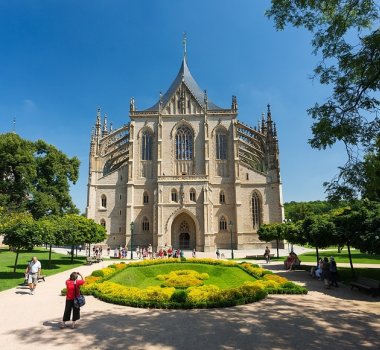
The Church of St. Barbara, a pearl of late Gothic architecture, is a UNESCO World Heritage Site and a symbol of Kutná Hora's wealth. The construction began in the 14th century under the direction of the Parléřov smelter, later developed by Benedikt Ried, the author of the unique tented roofs and circular vaulting. It was provisionally completed in the 16th century because of the silver house. In the 19th and 20th centuries it underwent regiotization. The interior is decorated with Gothic frescoes, Baroque altars and stained glass windows by František Urban, which depict not only Christian motifs but also important events of their time.
Hřbitovní kostel Všech svatých s kostnicí (Cemetery Church of All Saints in Sedlec - Ossuary)
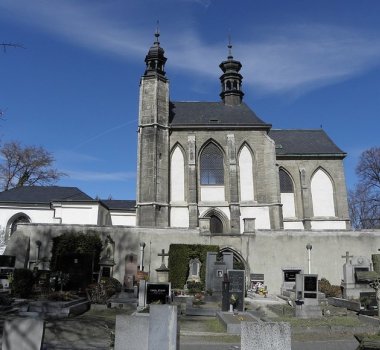
The cemetery church of All Saints with an ossuary is part of the former Cistercian abbey in Sedlec, founded in 1142. The two-storey carner church dates back to the 14th century. After the plague of 1318 and the Hussite wars, over 40,000 dead were buried here; the remains were later placed in the lower chapel. In the 18th century, the Schwarzenbergs had the ossuary redecorated by the carver František Rint. The cemetery church with the ossuary is a unique cultural and historical monument, and SEDLECY CEMETERY is thus a destination not only for people who have loved ones buried here, but also for thousands of visitors from all over the world.
Katedrála Nanebevzetí Panny Marie a sv. Jana Křtitele (Cathedral of the Assumption of Our Lady and St John the Baptist in Sedlec)
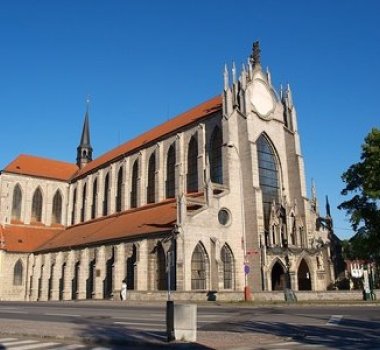
The Cathedral of the Assumption of the Virgin Mary and St. John the Baptist in Sedlec, part of UNESCO, is the convent church of the oldest Cistercian abbey in Bohemia. Built between 1290-1320, it combines North French Gothic with German elements. After the Hussite wars it was reconstructed by JB Santini in Baroque-Gothic style. It preserves precious artistic monuments and the Gothic Sedlec monstrance. The cathedral offers attic tours and a cinema with an animated history of the monastery.
Hrádek - Czech Museum of Silver, Medieval Silver Mine
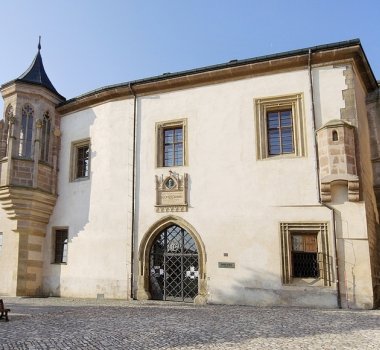
Hrádek, originally a wooden fortress (1312), was rebuilt into a Gothic residence by Václav of Donín (1400-1420). After the Hussite wars, Jan Smíšek of Vrchoviště transformed it into a patrician palace. In the 17th century, a Jesuit seminary and later a school were built here. The town bought Hrádek in 1910, and the museum was established here after the reconstruction in the 1950s. The Czech Silver Museum, opened in 1996, manages 185,000 objects, including a unique mining collection, and is one of the oldest and richest museums in the Czech Republic.
Jezuitská kolej (Jesuit College – Gallery of the Central Bohemian Region)
The Jesuit college in Kutná Hora was designed by Giovanni Domenico Orsi, an expert in fortress buildings. The original floor plan in E was not quite ready, the final form is in the shape of F. The construction was completed by Carlo Lurago after Orsi and was finished in 1750. The dormitory was austere, with a baroque façade. The Jesuits occupied it from 1678. An important feature was the covered corridor to St Barbara's church, which was closed in the 19th century. After the dissolution of the Order (1773), the college served the army until 1998. It was then converted into a gallery and underwent renovation.
Bývalý cisterciácký klášter (Former Cistercian Monastery)
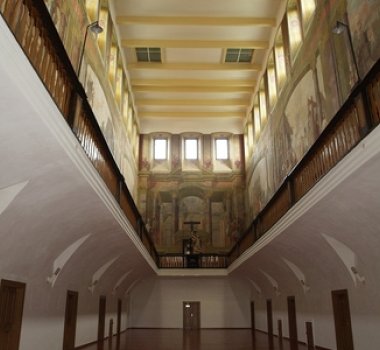
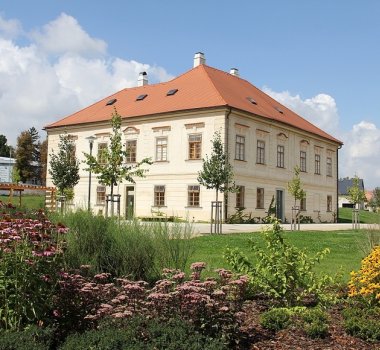
The Cistercian monks from Waldsassen founded their first Czech monastery in 1142 on land donated by the nobleman Miroslav of Cimburk. The site, strategically located on the Prague-Danube-Black Sea route, also contained silver deposits. Today, a Romanesque abbey chapel, later rebuilt in Baroque style, a Baroque convent and the Cathedral of the Assumption of the Virgin Mary and St. John the Baptist are preserved in the monastery grounds. Nowadays, the monastery is the production headquarters of Philip Morris ČR a.s. and allows visitors to visit the former Cistercian monastery, including the exhibition "The transformation of the monastery in Sedlec".
Kamenný dům (Stone House)
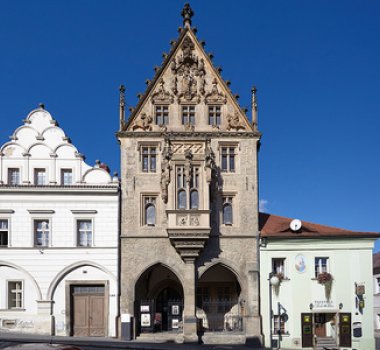
The stone house, built on pre-Husitic foundations, is probably a monument of late Gothic architecture and is part of the city's UNESCO World Heritage Site. It belonged to the townsman Prokop Kroupa, who was elevated to the nobility in 1499, as evidenced by the knights on the shield. The richly decorated shield was created by Brikcí Gauske from Wrocław. The house underwent alterations in 1839 and regauging in 1900-1902. It is managed by the Czech Museum of Silver, one of the oldest and richest museums in the Czech Republic with extensive archaeological, numismatic and mining collections.
Tylův dům (Tyl House)
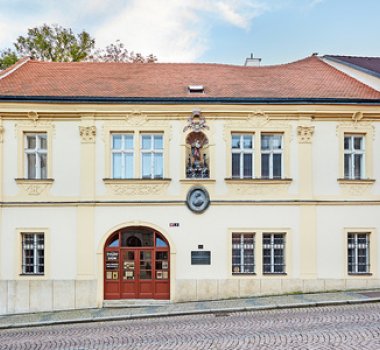
The Tyl House, named after Josef Kajetán Tyl, playwright and author of the text of the Czech national anthem, stands on Gothic foundations. Tyl was born here on 4 February 1808, when the house was called "Dům u zlatého hřebene" (House at the Golden Ridge). After the fire of the town in 1823, it was rebuilt and in 1862 a bust of Tyl was placed on the facade.The exhibits of the special fund of mining technology are among the oldest in Europe.
Morový sloup (Plague Column)
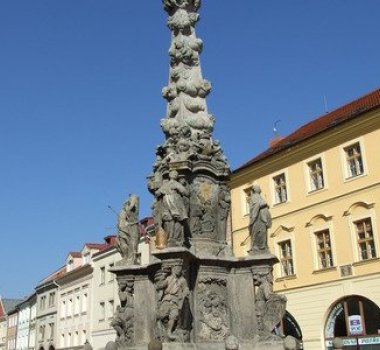
Kutná Hora‘s Baroque gem, the work of Jesuit sculptor Baugut, was built between 1713 and 1715 in response to the plague epidemic, during which more than a thousand people died in 1713. At the top of the column is a statue of the Virgin Mary Immaculate. As is typical for Kutná Hora, the plague column is also adorned with work motifs, this time in the form of sculptures of miners.
Kamenná kašna (Stone Fountain)
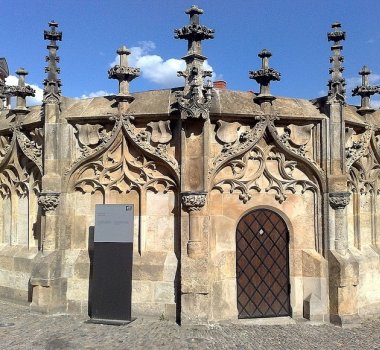
The intensive mining activity of the Middle Ages disrupted the underground water sources in Kutná Hora, which resulted in the town being short of drinking water. This problem was solved in 1495 by the construction of a dodecagon-shaped stone fountain on today‘s Rejsek Square. The fountain, which was originally roofed, served as a water reservoir, into which drinking water was brought via wooden piping from the spring of St Adalbert near Bylany 2.5 kilometers away. The town continued to be supplied with drinking water in this way until 1890. The dodecagon-shaped Late Gothic stone fountain was probably the work of the builder Briccius Gauske of Wroclaw.
Kaple Božího těla (Corpus Christi Chapel)
The Chapel of Corpus Christi at the Church of St. Barbara was founded as a two-storey cemetery chapel with an ossuary. The lower part was used for bones, the upper part probably for worship. As the importance of the church grew, it lost its function. The Jesuits later used it as an oratory, after the dissolution of the order it served as a warehouse or organ workshop. It fell into disrepair until the 1990s, when it was saved by reconstruction. Today, it is one of the best preserved Gothic-style rooms in our country.

Klášter řádu sv. Voršily a kostel Nejsvětějšího srdce páně
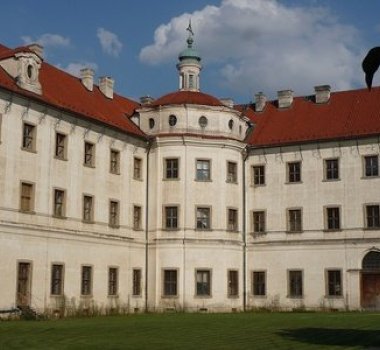
The monastery of St. Voršila was founded by the Voršil women who came to Kutné Hory in 1712. At first they lived in a rented house and were looking for a place for a new building. After twenty years of negotiations, construction began according to the plans of Kilian I. Dientzenhofer. The monastery was intended as a monumental building on a polygonal plan with a large central chapel in the middle. However, time was not in favour of such a grand plan and only three wings were built.
Kostel sv. Jakuba (Church of St James)
The Church of St. James is the oldest stone church in Kutná Hora and the spiritual centre of the town. Construction began in the 1430s, the main donors were minters and prefects. The influence of the Sedlec Cistercians is evident in the architecture and the original dedication to the Virgin Mary. The construction was completed in 1420, but due to problems with the ground only one tower was built, which reaches 80 m. The church contains valuable frescoes, the oldest inscription in Kutná Hora and a painting by Petr Brandl. The long history of the church has left a number of unique monuments from different periods.
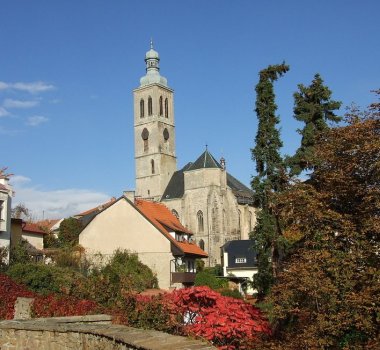
Kostel Nejsvětější Trojice (Church of the Holy Trinity
)
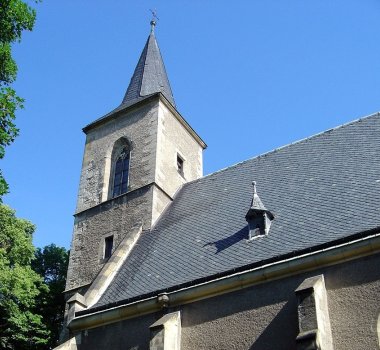
The Church of the Holy Trinity was built in the 15th century and rebuilt in the late Gothic style at the expense of Jan Smíšek of Vrchoviště. The presbytery and tower were added, which bears the coat of arms of the Smíšk family and a relief of miners. The church served as a family funeral chapel, but was later abandoned and used as a powder magazine. After a fire in 1817 it was rebuilt at the end of the 19th century. The building is distinguished by its elegant cross vault and seven-metre high sanctuary of the Jagiellonian Gothic style.
Kostel Matky Boží Na Náměti (Church of Our Lady “Na Náměti")
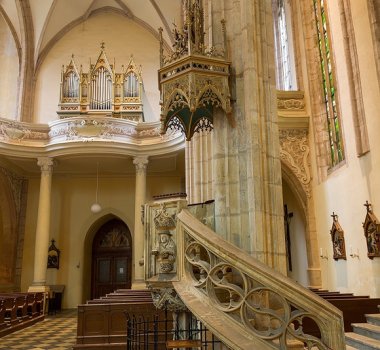
The Church of the Mother of God Na Náměti was founded in the 14th century as a cemetery church. After a fire in 1470, it was almost rebuilt with the help of the St. Barbour ironworks. The church has a unique staircase leading to the tower, a neo-Gothic altar with a late Gothic arch and rare paintings from the 16th century. The interior is dominated by a pulpit by Wendel Roskopf. In 1735, the painter Petr Jan Brandl was buried in the church and his memory is commemorated by a marble plaque.
Bývalá židovská synagoga (Former Jewish Synagogue)
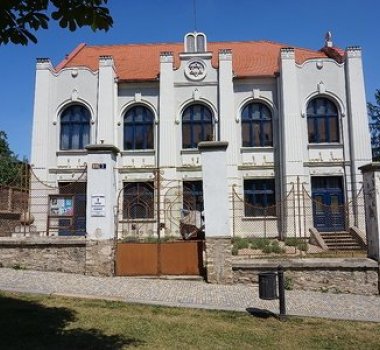
The former New Jewish synagogue built at the beginning of the 20th century served its original purpose until World War II. Then it was used by a local organ making workshop for a short time. Currently, it is in the possesion of the Czechoslovak Hussite Church and is accessible during services and European Heritage Days.
Městské Tylovo divadlo (Kutná Hora Tyl Municipal Theatre)
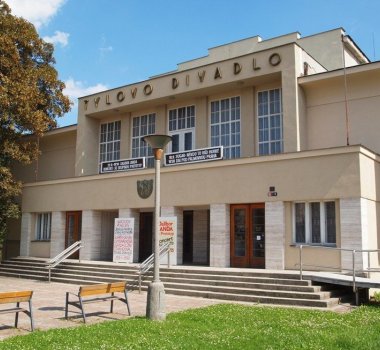
The historic building is associated with Josef Kajetán Tyl, a native of Kutná Hora who initiated the idea of his own theatre in the town. The construction according to the designs of architects Rudolf and Josef Hraba began in 1931 and the opening ceremony took place on 12 November 1933. The functionalist building is still in use today and was originally used by the Tyl Voluntary Association. The theatre does not have a permanent ensemble, but organizes cultural events, festivals and concerts. The capacity of the auditorium is 508 seats, including 6 wheelchair accessible, and there is also a small stage
Kino Modrý kříž (Modrý kříž Cinema)
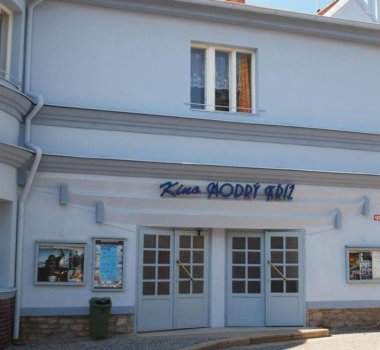
The Blue Cross Cinema is a valuable example of cuboexpressionist architecture in Kutná Hora. It was designed by architects Tomáš Pražák and Pavel Moravec in 1919 and completed in 1921. The tour is possible only during screenings. The cinema is one of the most modern in the DCI standard, has top Dolby Digital sound and 3D technology. Capacity is 190 seats on the ground floor and 116 on the balcony, the audience is seated
Průmyslová škola Kutná Hora (Technical School Kutná Hora)
The school was constructed at the end of the 1920s (1924-1928) and designed by architect Rudolf Ryšánek. It is a top quality work of modern architecture. The building originally belonged to the Provincial Technical School and became the core of the newly developing town district Hlouška. The building is not accessible for public.